Content
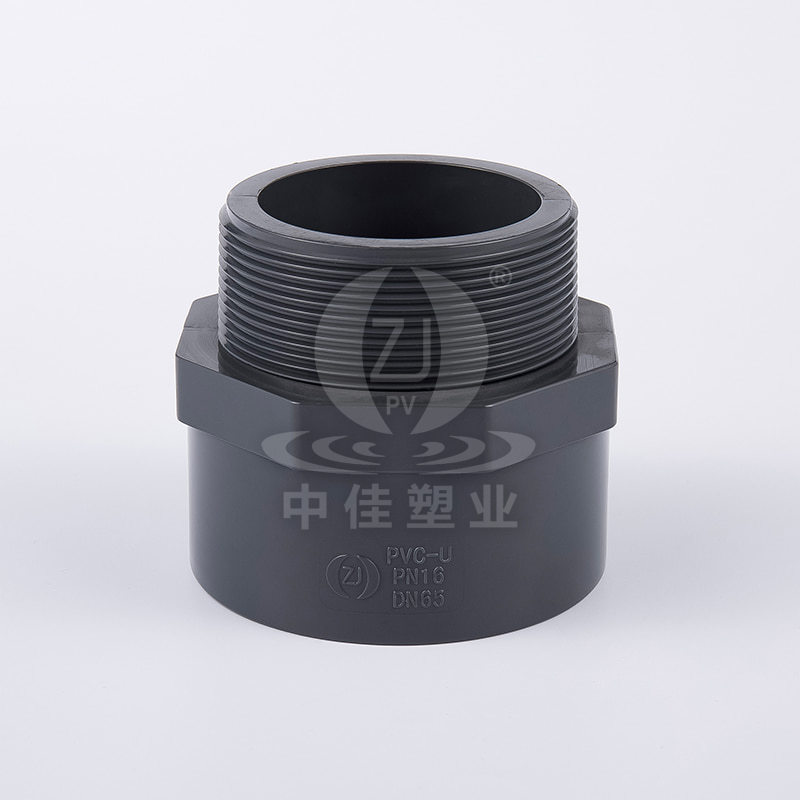
A PVC-U male adapter is a transition fitting used to connect unplasticized PVC pipe to components with female threaded connections, such as valves, pumps, tanks, or metal pipe sections. One end of the adapter is a plain socket designed for solvent cement bonding to PVC pipe, while the other end features external male threads, typically machined to BSP or NPT standards depending on regional specifications. This dual-end design allows plumbers and installers to transition seamlessly between a permanently bonded plastic pipe system and a removable threaded connection point.
Because PVC-U is rigid and does not flex like plasticized PVC, these adapters are commonly found in water supply lines, irrigation systems, swimming pool plumbing, and industrial fluid handling networks where a threaded connection is required to interface with metallic equipment or serviceable components.
Understanding the physical structure of a PVC-U male adapter helps installers select the correct part and install it properly. Each adapter is manufactured as a single molded piece, but it functions as two distinct connection zones.
The socket end is a smooth-bore cylindrical opening sized to accept the outer diameter of PVC-U pipe. Installers apply PVC primer and solvent cement to this joint, creating a permanent chemical weld between the pipe and the fitting once cured.
The threaded end carries external male threads that mate with a female-threaded fitting, valve body, or equipment port. Thread sealant tape or a compatible pipe dope is typically applied to this connection to prevent leakage, since the threads themselves do not form a watertight seal on their own.
PVC-U male adapters appear in a wide range of piping systems where a transition between bonded pipe and threaded components is necessary. Their corrosion resistance and chemical compatibility make them a practical choice compared to metal transition fittings in many wet environments.
In each of these settings, the adapter provides a practical way to combine the corrosion resistance of PVC-U pipe with the flexibility of threaded connections that can be disassembled for maintenance or equipment replacement.
Selecting the correct size and thread standard is one of the most important steps when specifying a PVC-U male adapter, since mismatched threads can lead to leaks or damaged fittings during installation.
| Pipe Size | Common Thread Standard | Typical Use |
| 1/2 inch | BSP or NPT | Residential fixtures and small valves |
| 3/4 inch | BSP or NPT | Garden irrigation and pool equipment |
| 1 inch | BSP or NPT | Pump connections and larger valves |
| 2 inch and above | BSP or NPT | Industrial fluid transfer systems |
BSP (British Standard Pipe) threads are common in Europe, Australia, and parts of Asia, while NPT (National Pipe Thread) is standard in North America. Because these two thread standards are not interchangeable, installers must confirm which standard matches their existing equipment before purchasing an adapter.
Proper installation of a PVC-U male adapter requires attention to both the solvent-welded socket end and the threaded end, since each connection type has different requirements for achieving a leak-free joint.
Begin by cutting the PVC-U pipe squarely and removing any burrs from the cut edge. Clean both the pipe end and the inside of the adapter socket with a PVC cleaner to remove dust and surface contaminants. Apply PVC primer to both surfaces, followed by an even coat of solvent cement, then insert the pipe into the socket with a quarter-turn twist to distribute the cement evenly. Hold the joint steady for the time specified by the cement manufacturer before releasing pressure.
Wrap PTFE thread seal tape clockwise around the male threads, typically applying two to three wraps, or apply a PVC-compatible thread sealant paste. Hand-tighten the adapter into the mating female fitting, then use a wrench for the final turns, taking care not to over-tighten since excessive torque can crack the plastic threads.
Many leak issues associated with PVC-U male adapters stem from avoidable installation errors rather than product defects. Awareness of these common mistakes can significantly improve joint reliability.
Following manufacturer-recommended cure times and torque specifications helps ensure that both ends of the adapter perform as intended over the long term.
PVC-U is valued in piping systems for its strong resistance to a wide range of chemicals, including many acids, alkalis, and salt solutions, making it suitable for both potable water systems and certain industrial fluid transfer applications. Unlike metal fittings, PVC-U male adapters do not corrode or rust when exposed to moisture, which reduces the risk of scale buildup or contamination in water systems over time.
However, PVC-U does have temperature limitations, with most standard-grade adapters rated for continuous use up to around 60 degrees Celsius. Systems carrying hot water or process fluids above this threshold typically require CPVC or metal alternatives instead, since prolonged exposure to higher temperatures can soften the plastic and compromise the threaded connection.
Once installed, PVC-U male adapters generally require minimal maintenance, but periodic inspection helps catch early signs of wear before they develop into leaks. Installers should periodically check threaded connections for signs of seepage, particularly in systems subject to vibration or thermal cycling, which can gradually loosen a threaded joint over time.
With proper installation and periodic inspection, PVC-U male adapters can provide many years of dependable service, offering a cost-effective and corrosion-resistant solution for connecting rigid plastic pipework to threaded components across residential, agricultural, and industrial applications.

Follow us
PVC-U
PVC-U Pipes PVC-U Fittings for Industry PVC-U Fittings for Water Supply PVC-U Pipes ASTM D1785 PVC-U Fittings ASTM SCH80
Copyright © Changzhou Zhongjia Plastic Industry Co., Ltd.All rights reserved.
 UPVC/CPVC Pipes Manufacturers


Copyright @ Changzhou Zhongjia Plastic Industry Co., Ltd.All Rights Reserved.



 عربى
عربى  中文简体
中文简体  Español