Content
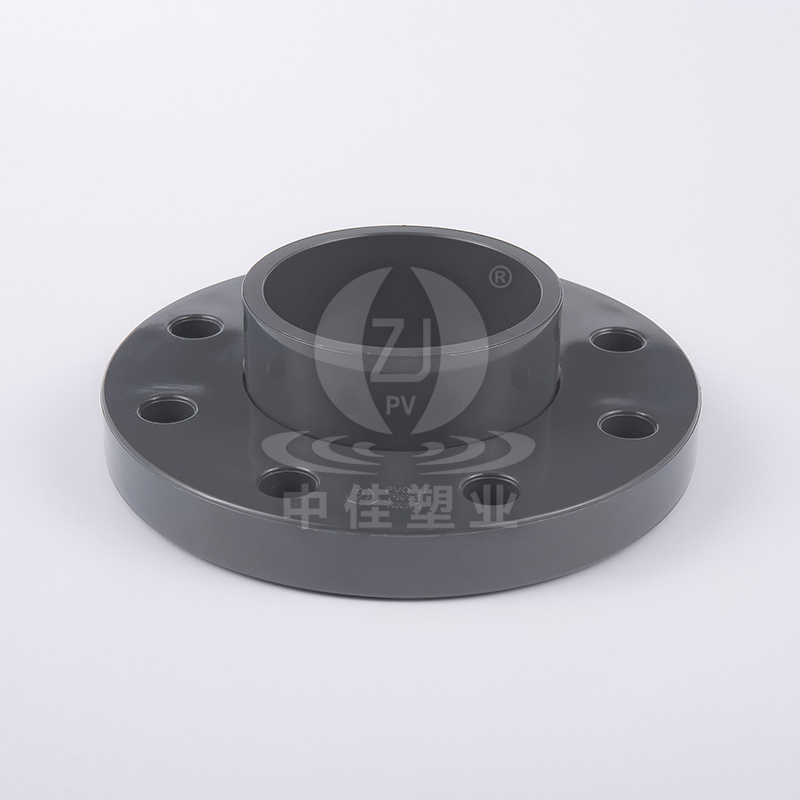
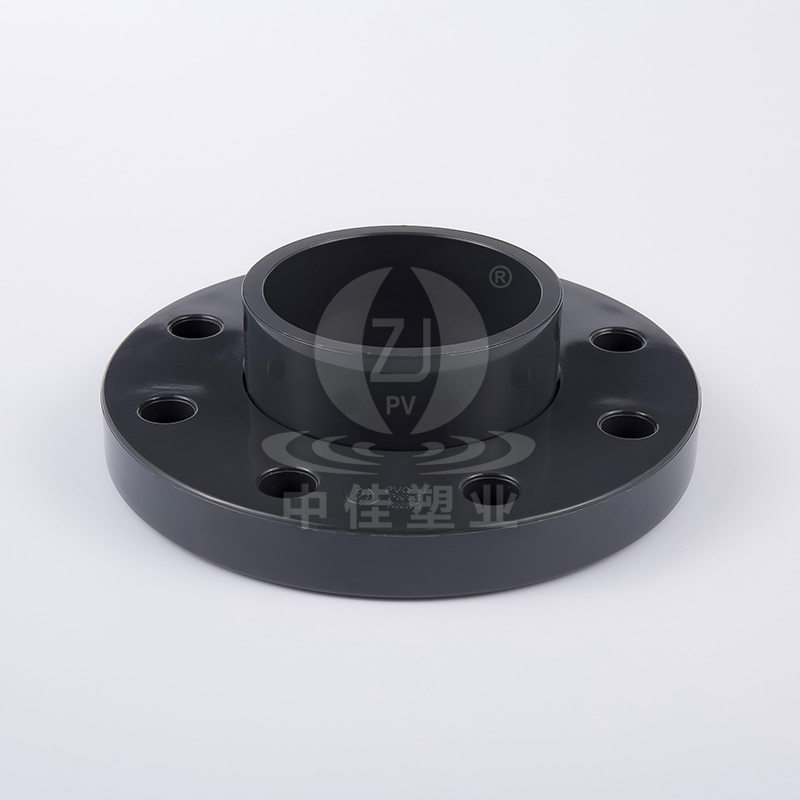
A PVC-U Van Stone flange is a two-piece pipe connection assembly made from unplasticized polyvinyl chloride (PVC-U), consisting of a stub end that bonds directly to the pipe and a separate backing ring, or flange ring, that slips loosely over the stub end to provide bolting support. This design differs from a standard fixed flange, where the flange face is permanently bonded to the pipe. Instead, the Van Stone design allows the backing ring to rotate freely around the stub end, making it significantly easier to align bolt holes during installation without needing to rotate the entire pipe section.
PVC-U material is chosen for its strong chemical resistance, light weight, and cost-effectiveness compared to metal alternatives, making Van Stone flanges in this material common in water treatment, chemical processing, and industrial piping systems where corrosion resistance is a priority.
Understanding the individual parts of a Van Stone flange assembly clarifies how the design achieves its rotational flexibility while maintaining a secure, leak-resistant seal.
The defining feature of a Van Stone flange is the free rotation of the backing ring around the stub end, which solves a common frustration in piping installation involving fixed flanges.
Because the backing ring can spin independently of the pipe, installers can rotate the ring to align bolt holes with the mating flange without needing to twist the entire pipe run. This is particularly valuable in complex piping systems where the pipe itself is fixed in position and cannot be easily rotated during final assembly.
Since alignment adjustments happen at the backing ring rather than the pipe itself, there is less torsional stress placed on the pipe and its solvent-welded or fused joints during installation, reducing the risk of joint damage that can occur when forcing a fixed flange into alignment.
Choosing between a Van Stone flange and a traditional fixed flange depends on installation conditions, system pressure requirements, and long-term maintenance considerations.
| Factor | Van Stone Flange | Fixed Flange |
| Bolt Hole Alignment | Easy, ring rotates freely | Difficult, requires pipe rotation |
| Installation Stress on Pipe | Lower | Higher during misalignment correction |
| Component Count | Two separate pieces | Single bonded piece |
| Best Use Case | Complex piping runs, frequent disassembly | Simple, permanent connections |
Proper installation is essential to ensure a leak-free, long-lasting connection. While specific procedures may vary slightly by manufacturer, the general installation sequence follows a consistent process.
PVC-U Van Stone flanges are widely used in industries where corrosion resistance and installation flexibility are equally important. Water and wastewater treatment facilities frequently use these flanges to connect PVC-U piping runs that carry chemically treated water, since the material resists degradation from chlorine and other treatment chemicals. Chemical processing plants also rely on PVC-U Van Stone flanges for transporting corrosive fluids that would degrade metal piping over time. Additionally, irrigation and agricultural piping systems benefit from the lightweight nature of PVC-U flanges, which simplifies installation and reduces the structural support needed compared to heavier metal alternatives.
When sourcing a PVC-U Van Stone flange, buyers should confirm the pressure rating matches system requirements, since PVC-U flanges are typically available in various pressure classes suited to different operating conditions. The backing ring material should also be selected based on the surrounding environment, as PVC-U rings offer maximum corrosion resistance while metal backing rings may be chosen for applications requiring higher mechanical strength. Gasket compatibility with the transported fluid is another critical consideration, since an incompatible gasket material can degrade over time and compromise the seal, leading to leaks even when the flange itself remains structurally sound.

Follow us
PVC-U
PVC-U Pipes PVC-U Fittings for Industry PVC-U Fittings for Water Supply PVC-U Pipes ASTM D1785 PVC-U Fittings ASTM SCH80
Copyright © Changzhou Zhongjia Plastic Industry Co., Ltd.All rights reserved.
 UPVC/CPVC Pipes Manufacturers


Copyright @ Changzhou Zhongjia Plastic Industry Co., Ltd.All Rights Reserved.



 عربى
عربى  中文简体
中文简体  Español