Content
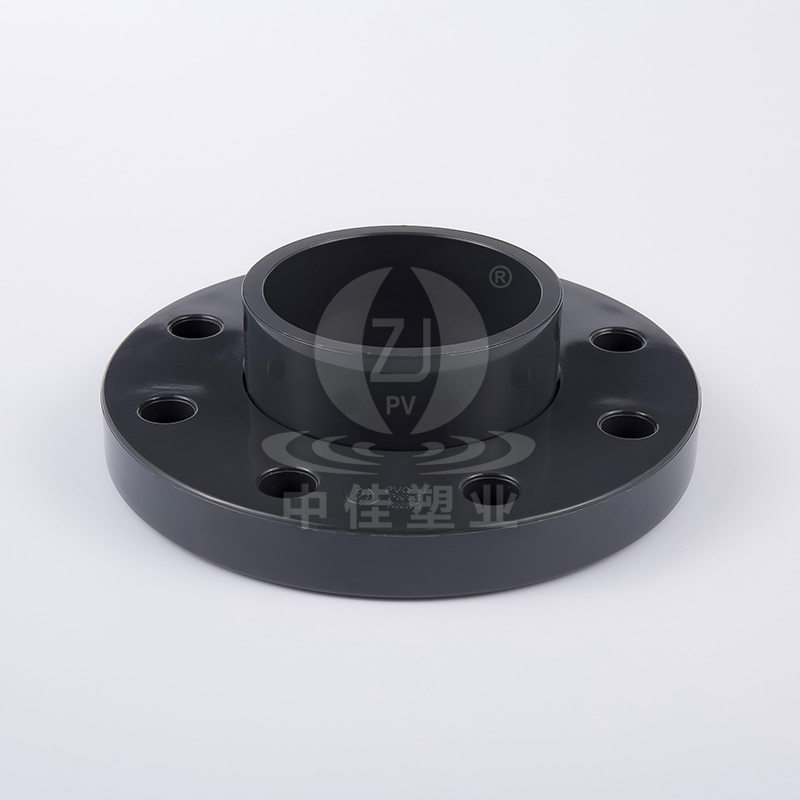
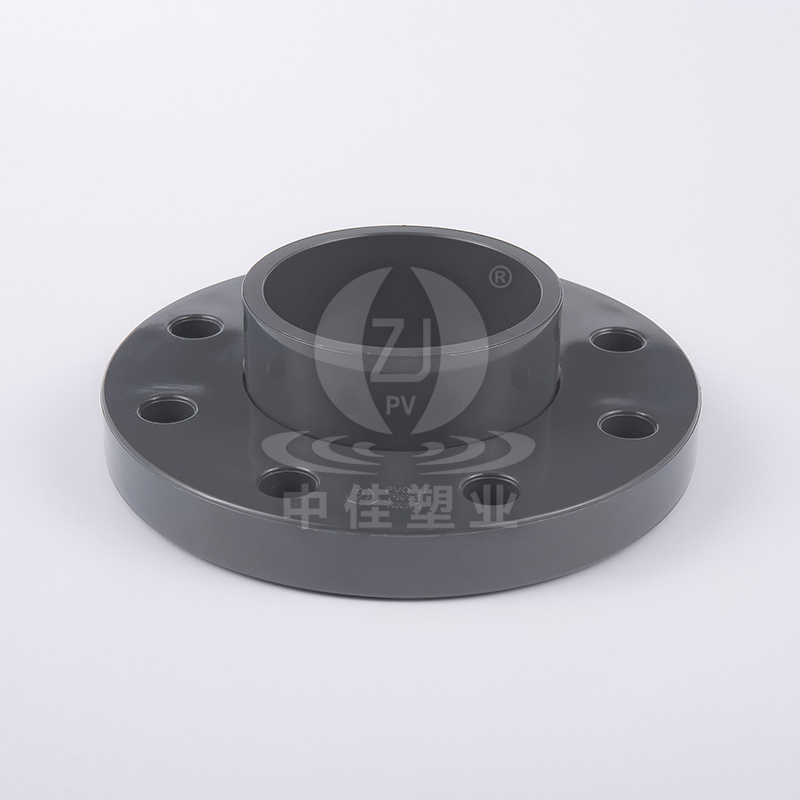
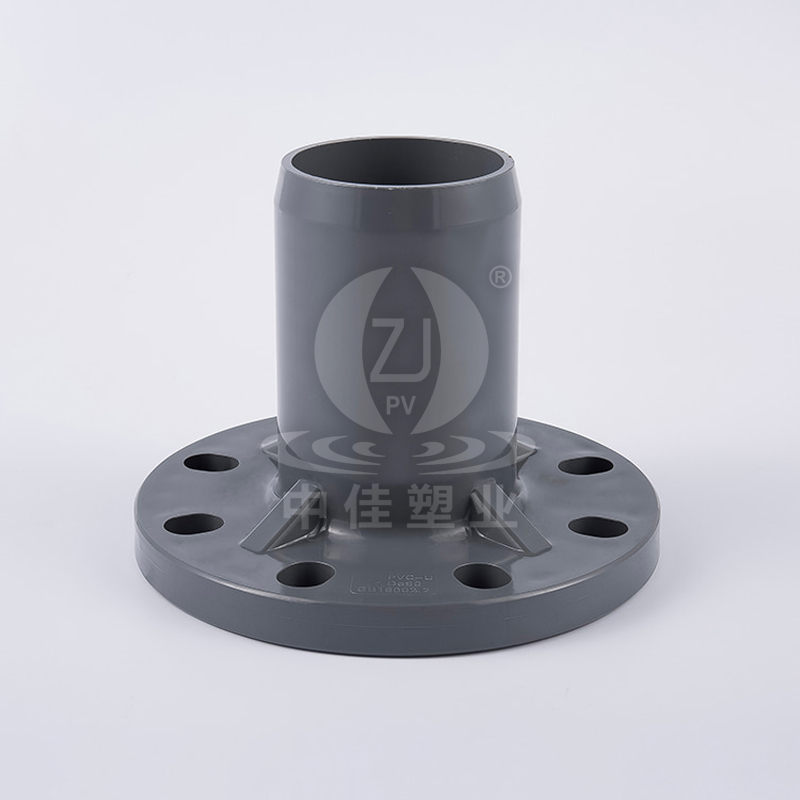
A PVC-U spigot flange is a pipe fitting that combines a plain-ended spigot — a smooth, cylindrical stub of pipe with a defined outer diameter — with a flat circular flange face, allowing a section of unplasticized polyvinyl chloride (PVC-U) piping to be connected to a flanged valve, pump, meter, or metallic pipe section using bolted joints. The spigot end is dimensioned to match the outside diameter of the corresponding PVC-U pipe series, enabling the fitting to be solvent-cemented or mechanically joined directly onto the pipe without any additional adapter. The flange face, typically drilled to a standardized bolt circle pattern, accepts a full-face or raised-face gasket and is secured against the mating flange of the adjacent component using bolts and nuts tightened to a controlled torque.
PVC-U as a material offers an outstanding combination of chemical resistance, mechanical strength, dimensional stability, and low cost that makes it the dominant material for pressure piping in water supply, irrigation, industrial chemical handling, and wastewater treatment applications globally. The spigot flange fitting extends this material system to interfaces where flanged connections are required — such as connections to pumps, valves, flow meters, and transitions to ductile iron or stainless steel flanged equipment — without requiring a complete transition to metallic piping at those interfaces. Understanding the construction, dimensional standards, pressure ratings, and installation requirements of PVC-U spigot flanges is essential for piping engineers, contractors, and procurement specialists working on fluid handling systems.
PVC-U spigot flanges are injection-moulded or machined from unplasticized polyvinyl chloride compound formulated to meet the requirements of international standards for pressure pipe fittings. The material is specifically the unplasticized grade — meaning no plasticizer is added to the PVC polymer — which preserves the material's inherent rigidity, strength, and chemical resistance. Plasticized PVC (PVC-P), by contrast, is flexible and unsuitable for pressure pipe fittings. The PVC-U compound used in pressure fittings typically contains impact modifiers, heat stabilizers, processing aids, and pigment (usually grey or off-white) in precisely controlled proportions to achieve the required balance of toughness, UV stability, and long-term hydrostatic pressure resistance.
The spigot flange is a single-piece moulded component in which the spigot and flange are integrally formed without any adhesive joint or mechanical assembly between the two parts. This monolithic construction eliminates any potential leak path between the spigot shank and the flange body, which would be a concern if the two parts were manufactured separately and joined. The flange face is machined flat to a surface roughness compatible with the gasket material specified for the application, ensuring that the compressed gasket forms an effective seal across the full flange face area under bolt load.
PVC-U spigot flanges are manufactured to conform to internationally recognized dimensional standards that define the outside diameter and wall thickness of the spigot, the flange outside diameter, bolt circle diameter, number and diameter of bolt holes, and flange face thickness. Compliance with these standards ensures dimensional interchangeability between components from different manufacturers and compatibility with the flanged equipment to which the fitting will be connected.
The most widely referenced standards for PVC-U spigot flanges and the piping systems they serve include the following:
The flange drilling pattern — defined by the bolt circle diameter (PCD), number of bolt holes, and bolt hole diameter — must match the mating flange of the connected equipment. The most common drilling standards encountered for PVC-U spigot flanges are PN10 and PN16 to EN 1092-1 (European metric flanges), Table D and Table E to BS 4504 (British standard flanges), Class 150 to ANSI B16.5 (North American flanges), and Table E or F to AS 2129 (Australian flanges). It is critically important that both the flange drilling pattern and the pressure rating are specified when ordering PVC-U spigot flanges to ensure compatibility with the mating equipment and system pressure class.

The pressure rating of a PVC-U spigot flange assembly depends on three interdependent factors: the nominal pressure class of the fitting itself, the pressure rating of the pipe to which the spigot is joined, and the operating temperature of the fluid being conveyed. PVC-U fittings are typically rated to PN10 (10 bar) or PN16 (16 bar) at a reference temperature of 20°C. The following table shows standard pressure derating factors for PVC-U as temperature increases above the 20°C reference:
| Operating Temperature (°C) | Derating Factor | Effective Pressure Rating (PN16 Base) |
| 20°C | 1 | 16.0 bar |
| 30°C | 0.8 | 12.8 bar |
| 40°C | 0.63 | 10.1 bar |
| 50°C | 0.5 | 8.0 bar |
| 60°C | 0.4 | 6.4 bar |
These derating factors reflect the thermoplastic nature of PVC-U, which loses stiffness and long-term strength progressively as temperature rises. PVC-U is generally not recommended for continuous service above 60°C, and the practical upper limit for pressure applications is typically taken as 50°C to maintain an adequate safety margin. For higher temperature applications, alternative thermoplastic materials such as CPVC (chlorinated PVC), PP-R (polypropylene random copolymer), or PVDF (polyvinylidene fluoride) should be considered, as these materials retain significantly higher pressure ratings at elevated temperatures.
The gasket used in a PVC-U spigot flange joint is a critical component that must be selected with care. Unlike metallic flange joints where high bolt loads can be applied to achieve sealing on relatively hard mating surfaces, PVC-U flange faces have limited compressive strength and must not be over-loaded during bolt tightening. This constraint means that gasket selection and bolt torque specification are closely linked in PVC-U flange joint design.
Full-face gaskets extend across the entire flange face, including the bolt hole positions, and are the standard recommendation for PVC-U flange joints. By distributing the bolt load over the full flange face area rather than concentrating it on an inner seating ring, full-face gaskets reduce the unit stress applied to the PVC-U flange face, significantly lowering the risk of flange cracking or creep deformation under bolt load. EPDM (ethylene propylene diene monomer) rubber is the most widely used gasket material for water and general chemical service due to its excellent resistance to water, ozone, UV, and a wide range of dilute acids and alkalis. NBR (nitrile butadiene rubber) is preferred for oil-containing fluids, and PTFE sheet gaskets are used for aggressive chemical service where rubber elastomers would be attacked by the process fluid.
Gasket thickness for PVC-U flange joints is typically 3 mm, providing sufficient compressibility to seal minor surface irregularities without requiring excessive bolt load. Gasket hardness (Shore A) should be in the range of 50–70 for EPDM and NBR materials used with PVC-U flanges. Harder gaskets require higher seating stress to achieve a seal, which may approach or exceed safe bolt torque limits for PVC-U flanges, particularly in larger nominal diameters where the bolt circle diameter is larger and the lever arm effect of bolt load on the flange face is more pronounced.
Correct installation of PVC-U spigot flange joints is essential for achieving leak-free service and preventing premature fitting failure. The following procedure reflects industry best practice for solvent-cemented spigot flange installations:
PVC-U spigot flanges are found across a wide range of fluid handling applications where the chemical resistance, cost-effectiveness, and low weight of PVC-U piping is combined with the need for bolted flange connections at equipment interfaces. The most significant application areas include water treatment and distribution plants, where PVC-U spigot flanges connect pipe runs to flanged gate valves, butterfly valves, check valves, and flow meters throughout the treatment process and distribution network. In swimming pool and water feature systems, spigot flanges provide serviceable connections to pumps, filters, and chemical dosing equipment that require periodic removal for maintenance without cutting the pipe.
Industrial chemical processing plants use PVC-U spigot flanges extensively in systems handling dilute acids, alkalis, salt solutions, and oxidizing agents that would rapidly corrode metallic piping. The flanged connections at pump suctions and discharges, heat exchanger nozzles, and tank outlets enable equipment to be isolated and removed for maintenance while maintaining the integrity of the surrounding PVC-U piping system. Irrigation and agricultural water supply systems use PVC-U spigot flanges at pump stations and filter bank connections where the combination of low material cost, corrosion immunity, and the ability to connect to standard flanged agricultural equipment makes PVC-U the material of choice for mainline infrastructure.
When sourcing PVC-U spigot flanges for critical applications, a structured quality verification process protects against substandard products that may fail prematurely in service. The following checklist should be applied to supplier qualification and incoming inspection:

Follow us
PVC-U
PVC-U Pipes PVC-U Fittings for Industry PVC-U Fittings for Water Supply PVC-U Pipes ASTM D1785 PVC-U Fittings ASTM SCH80
Copyright © Changzhou Zhongjia Plastic Industry Co., Ltd.All rights reserved.
 UPVC/CPVC Pipes Manufacturers


Copyright @ Changzhou Zhongjia Plastic Industry Co., Ltd.All Rights Reserved.



 عربى
عربى  中文简体
中文简体  Español