Content
PVC butterfly valves are widely used in water treatment, irrigation, chemical processing, and HVAC systems because they are lightweight, corrosion-resistant, and cost-effective. However, when specifying these valves for industrial applications, engineers and procurement teams frequently ask: can PVC butterfly valves handle high pressure and temperature? This article provides a practical, technical evaluation of PVC butterfly valve capabilities, limitations, material and seat options, installation and testing considerations, and selection guidance to help you choose the right valve for your system.
Polyvinyl chloride (PVC) is a thermoplastic polymer with excellent chemical resistance to many acids, salts, and alkalis, plus low cost and ease of fabrication. Its mechanical strength and stiffness are adequate for moderate-pressure applications at ambient temperatures. However, PVC’s modulus and yield strength decline with rising temperature, and the material becomes more ductile as it approaches its glass transition and softening ranges. Therefore, the material itself imposes the first set of limits on allowable pressure and temperature.
At elevated temperatures PVC experiences reduced tensile strength and increased creep under sustained loading. Long-term exposure to temperatures near or above the pipe/valve maximum rating accelerates dimensional changes and can lead to deformation around seals and fasteners. UV exposure and certain solvents will further degrade mechanical properties if not properly protected.

Most commercially available PVC butterfly valves are designed for low- to moderate-pressure systems. Typical pressure ratings (at 20 °C / 68 °F) range from PN6 to PN16 equivalents (approx. 6–16 bar or 90–232 psi) for engineered PVC compounds and valve constructions. However, those figures are strongly dependent on valve size, disc design, reinforcement, and manufacturer testing. Temperature ratings are usually conservative: standard PVC valves are commonly rated up to 60 °C (140 °F) for short-term use, with a recommended continuous-service limit around 40–50 °C (104–122 °F).
Different PVC formulations (uPVC vs. CPVC), valve body designs (reinforced ribs, thicker walls), and seat materials result in different allowable working pressures and temperatures. CPVC (chlorinated PVC) offers higher temperature tolerance than standard uPVC and is sometimes used where temperatures approach the upper limits of PVC service.
The valve seat and seal materials often control the true operational temperature limit more than the thermoplastic body. Common seat materials include EPDM, NBR (Buna-N), FKM (Viton), PTFE (Teflon), and thermoplastic elastomers. Each has a different acceptable temperature range and chemical compatibility profile.
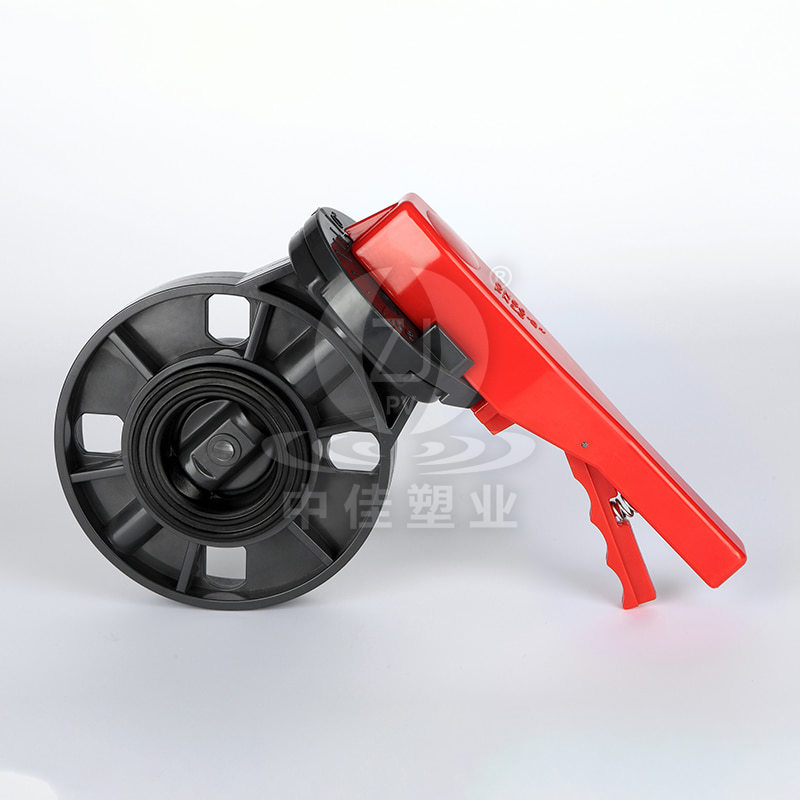
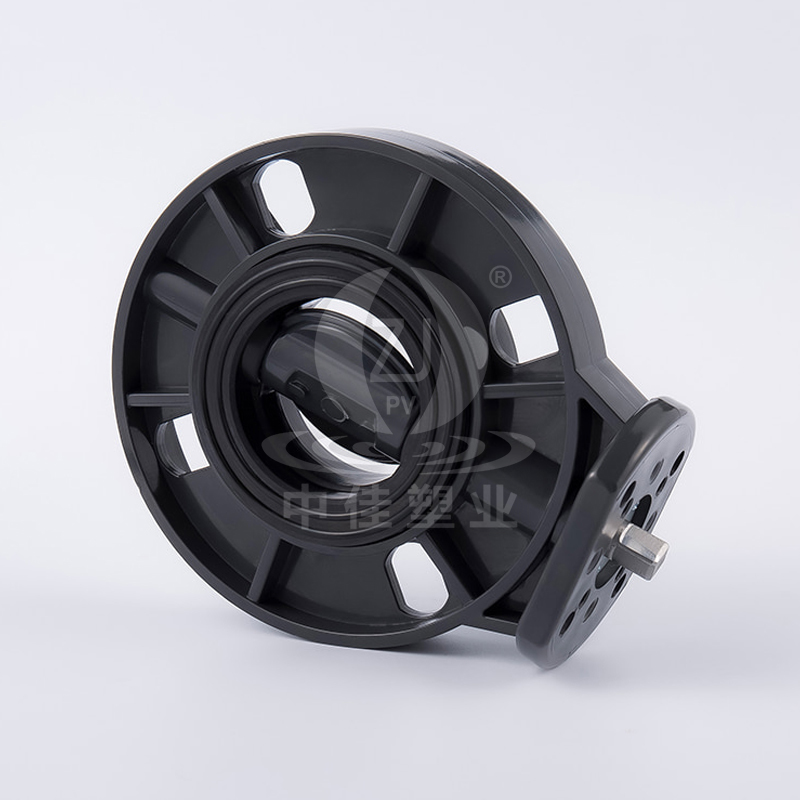
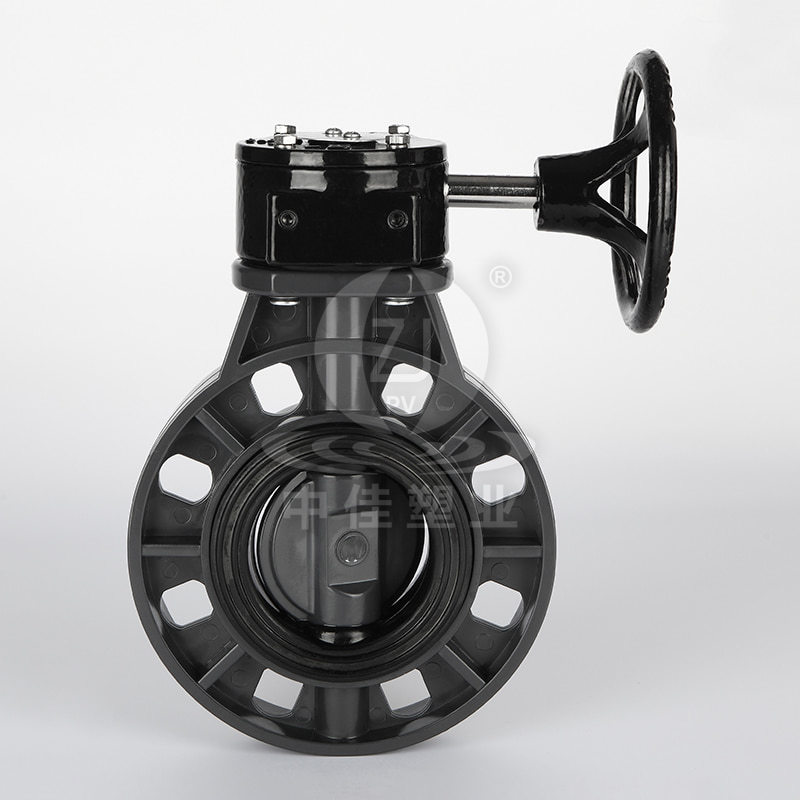
Butterfly valves are made in wafer, lug, and double-flanged designs. Structural reinforcements, disc materials (PVC, PVC-coated metal, or metal), shaft design, and bearing arrangements influence pressure capacity and longevity.
Wafer-style PVC butterfly valves are lightweight and economical but rely on surrounding flange bolts for retention and are less robust under high differential pressures. Lug-style valves have threaded inserts allowing downstream isolation when unbolted on one side, improving serviceability. Double-flanged designs (rare in pure PVC) or reinforced-bodied valves increase mechanical stability and can bear higher pressure loads when engineered with thicker walls or metal inserts.
In most practical industrial applications, expect the following conservative guidance unless the manufacturer specifies otherwise:
These are general guidelines — always refer to manufacturer-specific pressure-temperature (P-T) curves. P-T curves show allowable working pressure as temperature increases and are the single most important document when assessing valve suitability.
Even when a valve’s nominal rating seems satisfactory, conservative derating is good engineering practice. Allow for pressure surges, thermal expansion, and transient heat sources. Consider the following operational precautions:
Request factory test reports including hydrostatic shell and seat tests, cyclical endurance tests, and material certificates. Look for compliance with applicable standards for plastic valves such as ISO 9393/ISO 14313 (where relevant), ANSI/ASME B16.34 considerations for pressure-containing parts, and manufacturer-specific ratings. Field validation and pilot installations under real fluid and temperature conditions are advisable for marginal applications.
At higher temperatures and pressures, monitor for accelerated seat wear, shaft loosening, creep deformation, or leaks around seals. Establish an inspection schedule based on operating hours and thermal cycles. Keep spares of common wear items (seats, O-rings, shaft bearings) and document any drift in torque-to-operate as an early warning of degradation.
Use the following practical checklist when evaluating whether a PVC butterfly valve is suitable for a high-pressure or high-temperature application:
| Valve/Material | Typical Max Continuous Temp | Typical Max Pressure (small sizes) | Best Use Case |
| uPVC butterfly | 40–50 °C | PN6–PN10 (6–10 bar) | Cold water, chemicals at ambient temp |
| CPVC butterfly | 60–90 °C | PN6–PN16 (varies) | Hot water, elevated-temp chemical service |
| PVC body + PTFE seat | Depends on body; seat tolerant | Dependent on body design | Aggressive chemicals where seat temp matters |
If your application routinely sees temperatures above 60–80 °C, frequent high-pressure transients, or aggressive media that challenge PVC, consider alternatives: metal butterfly valves with corrosion-resistant linings, stainless steel valves, or high-performance plastics like PVDF for higher temperature and chemical tolerance. These alternatives carry higher initial cost but reduce risk and maintenance in demanding service.
PVC butterfly valves are a reliable, economical choice for many moderate-pressure and ambient-temperature applications. They are typically not the best choice for sustained high-temperature or very high-pressure services without special materials or design modifications. Always consult manufacturer P-T curves, choose compatible seat materials, derate for thermal effects, and provide surge protection and inspection protocols. Where your duty is marginal, pilot tests or selecting a higher-performance material are prudent steps to ensure safe, long-term operation.

Follow us
PVC-U
PVC-U Pipes PVC-U Fittings for Industry PVC-U Fittings for Water Supply PVC-U Pipes ASTM D1785 PVC-U Fittings ASTM SCH80
Copyright © Changzhou Zhongjia Plastic Industry Co., Ltd.All rights reserved.
 UPVC/CPVC Pipes Manufacturers


Copyright @ Changzhou Zhongjia Plastic Industry Co., Ltd.All Rights Reserved.



 عربى
عربى  中文简体
中文简体  Español