Content
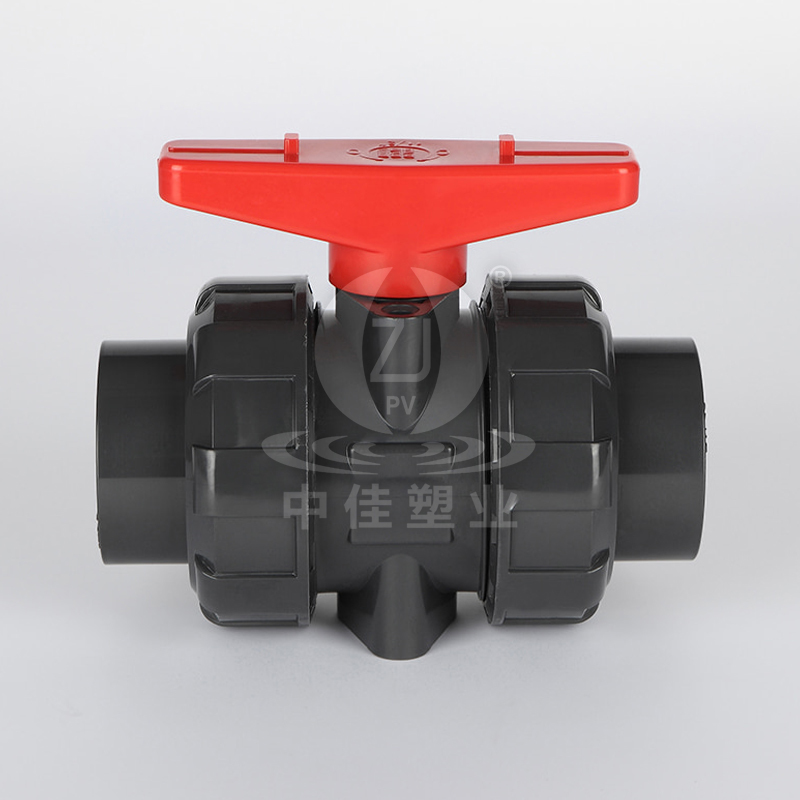
The fundamental distinction between CPVC and UPVC ball valves lies in their base polymer chemistry and manufacturing processes. UPVC, or Unplasticized Polyvinyl Chloride, consists of pure PVC resin without plasticizers, creating a rigid material through polymerization of vinyl chloride monomers. The molecular chains remain straight and unmodified, resulting in a crystalline structure that provides excellent chemical resistance and mechanical strength at ambient temperatures. CPVC, which stands for Chlorinated Polyvinyl Chloride, begins with the same PVC base but undergoes an additional chlorination process that introduces additional chlorine atoms into the polymer backbone, increasing the chlorine content from approximately fifty-seven percent in standard PVC to sixty-three to sixty-nine percent in CPVC.
This chlorination process fundamentally alters the material's properties by disrupting the regular molecular structure and increasing intermolecular bonding strength. The additional chlorine atoms create a more random molecular arrangement that requires higher temperatures to soften or melt the material, directly translating to superior heat resistance. The chlorination also increases the material's density from approximately 1.4 grams per cubic centimeter for UPVC to 1.55 grams per cubic centimeter for CPVC, while modifying surface energy characteristics that affect chemical interactions. These molecular-level differences cascade into significant variations in performance characteristics that determine which material is appropriate for specific valve applications.
Temperature capability represents the most significant practical difference between CPVC and UPVC ball valves, fundamentally determining their suitable applications. UPVC ball valves are limited to continuous operating temperatures not exceeding sixty degrees Celsius, with brief excursions to slightly higher temperatures tolerated depending on pressure conditions and duration. Above this threshold, UPVC begins to soften and lose structural integrity, with pressure ratings decreasing rapidly as temperature increases. This temperature limitation restricts UPVC valves to cold water systems, ambient temperature chemical processes, and applications where fluid temperatures remain consistently below the material's threshold.
CPVC ball valves offer dramatically superior thermal performance, with continuous service ratings typically extending to ninety to ninety-five degrees Celsius depending on pressure requirements and specific formulation. Some high-performance CPVC compounds can handle temperatures approaching one hundred degrees Celsius for lower-pressure applications. This extended temperature capability makes CPVC valves suitable for hot water distribution systems, industrial processes involving heated fluids, and applications where temperature variations or occasional thermal excursions occur. The higher heat deflection temperature of CPVC, measuring approximately one hundred degrees Celsius compared to seventy-five degrees Celsius for UPVC, provides greater safety margins and reduces risk of deformation or failure when exposed to unexpected temperature spikes.
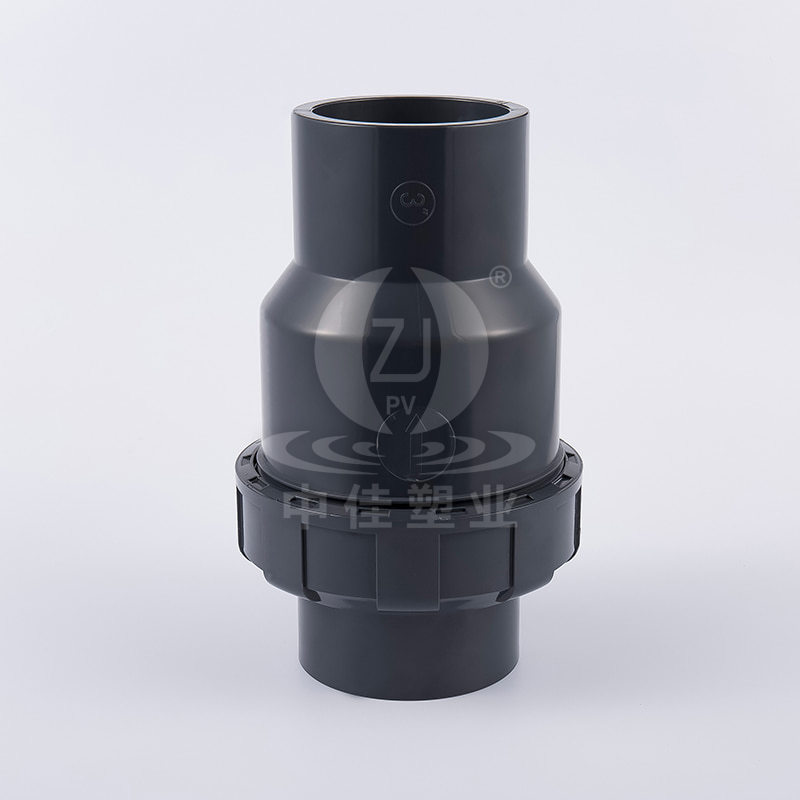
Both materials exhibit relatively high coefficients of thermal expansion compared to metals, but CPVC demonstrates slightly lower expansion rates than UPVC. UPVC experiences linear thermal expansion of approximately 0.07 millimeters per meter per degree Celsius, while CPVC expands at roughly 0.062 millimeters per meter per degree Celsius. Although this difference appears modest, it becomes significant in long piping runs or systems experiencing substantial temperature variations. The lower expansion rate of CPVC reduces stress on valve bodies, connections, and adjacent piping during thermal cycling, potentially extending service life and reducing maintenance requirements in applications with fluctuating temperatures.
Both UPVC and CPVC ball valves demonstrate excellent resistance to a broad spectrum of chemicals, though subtle differences exist that influence material selection for specific applications. UPVC exhibits outstanding resistance to most acids, alkalis, salt solutions, and aliphatic hydrocarbons at ambient temperatures, making it ideal for chemical processing, water treatment, and industrial waste handling where corrosive substances are encountered. The material resists attack from sulfuric acid, hydrochloric acid, sodium hydroxide, and numerous other aggressive chemicals that would rapidly destroy metallic valves, providing reliable service in environments where corrosion resistance is paramount.
CPVC generally matches or exceeds UPVC's chemical resistance while offering the additional advantage of maintaining this resistance at elevated temperatures where UPVC would fail mechanically. This combination proves particularly valuable in applications involving hot acids, alkaline cleaning solutions at elevated temperatures, or chemical processes requiring both corrosion resistance and thermal stability. However, both materials share certain chemical incompatibilities that users must understand. Neither UPVC nor CPVC should be used with aromatic hydrocarbons like benzene or toluene, chlorinated solvents such as methylene chloride, ketones including acetone, or certain concentrated oxidizing agents. Polar organic solvents can cause swelling, stress cracking, or dissolution of both materials, necessitating careful compatibility verification before specifying either valve type for chemical service.
| Property | UPVC Ball Valves | CPVC Ball Valves | Practical Impact |
| Tensile Strength | 45-55 MPa | 50-60 MPa | CPVC offers higher strength |
| Max Pressure at 20°C | 10-16 bar typical | 10-16 bar typical | Similar at ambient temp |
| Max Pressure at 60°C | 4-6 bar derated | 8-12 bar maintained | CPVC superior at temperature |
| Impact Resistance | Good at ambient | Better overall | CPVC more robust |
| Modulus of Elasticity | 2800-3200 MPa | 3000-3400 MPa | CPVC slightly stiffer |
| Service Life Expectancy | 25-50 years | 25-50 years | Both offer long service |
UPVC ball valves find widespread use in applications where fluids remain at or near ambient temperature and cost considerations favor economical materials. Municipal water distribution systems extensively employ UPVC valves for isolation, flow control, and maintenance operations on cold water mains, with the material's corrosion immunity eliminating concerns about rust, scale buildup, or electrochemical degradation that plague iron and steel valves. The smooth internal surfaces of UPVC valves maintain low friction losses and resist fouling, contributing to energy-efficient pumping and consistent hydraulic performance throughout decades of service.
Chemical processing industries utilize UPVC ball valves for handling corrosive acids, caustic solutions, and salt brines at ambient temperatures where the material's exceptional chemical resistance provides reliable service at a fraction of the cost of exotic metal alloys. Swimming pool and water treatment facilities depend on UPVC valves for chlorinated water service, as the material resists degradation from oxidizing chemicals that would corrode brass or bronze valves. Agricultural irrigation systems benefit from UPVC's combination of low cost, corrosion resistance, and light weight, facilitating installation and reducing support requirements for above-ground piping networks. Building drainage and vent systems represent another major application area, with UPVC valves controlling wastewater flows in environments where metallic valves would suffer rapid corrosion from aggressive drain chemicals and biological activity.
CPVC ball valves excel in hot water distribution systems for residential, commercial, and industrial buildings, where water temperatures routinely reach sixty to eighty degrees Celsius. The material's thermal stability ensures reliable operation without the softening, deformation, or pressure rating reduction that would render UPVC unsuitable for these applications. Fire protection sprinkler systems increasingly specify CPVC valves due to the material's superior fire resistance compared to UPVC, with CPVC maintaining structural integrity at higher temperatures encountered during fire events and exhibiting lower flame spread characteristics.
Industrial processes involving heated chemicals, hot caustic solutions, or elevated-temperature wash water benefit from CPVC's combination of thermal and chemical resistance. Food and beverage processing facilities employ CPVC valves in clean-in-place systems where hot sanitizing solutions circulate through piping networks, with the material resisting both chemical attack and thermal degradation during repeated high-temperature cleaning cycles. Pharmaceutical manufacturing operations utilize CPVC valves for purified water systems operating at elevated temperatures, taking advantage of the material's ability to maintain sanitary conditions without leaching contaminants while withstanding routine hot water sanitization. Solar thermal systems and heat recovery applications leverage CPVC's temperature resistance for circulating heated fluids that would exceed UPVC's capabilities.
Material costs represent a significant differentiator between UPVC and CPVC ball valves, with UPVC valves typically priced twenty-five to forty percent lower than equivalent CPVC units due to simpler manufacturing processes and lower raw material costs. For large projects involving hundreds or thousands of valves, this cost differential can translate to substantial budget savings when UPVC's capabilities meet application requirements. The lower cost of UPVC makes it the preferred choice for cold water systems, ambient temperature chemical processes, and other applications where thermal resistance is unnecessary, allowing project budgets to be optimized without compromising performance or reliability.
However, lifecycle cost analysis often reveals that CPVC's higher initial cost is justified when its superior temperature capability prevents premature failures, extends service life, or enables system designs that reduce overall installation costs. Using CPVC valves rated for higher temperatures provides safety margins against upset conditions and future process changes that might expose components to higher temperatures than originally anticipated. The ability to use a single material throughout both hot and cold portions of a system can simplify inventory management, reduce spare parts requirements, and minimize risk of installation errors where wrong materials might be inadvertently installed in high-temperature service. For many applications, CPVC's modest cost premium proves worthwhile when evaluated against total system costs and long-term reliability requirements.
Both UPVC and CPVC ball valves utilize similar connection methods, though important differences in solvent cement formulations must be observed. Solvent welding represents the most common joining technique for both materials, using specially formulated cements that dissolve the plastic surface to create fusion bonds as the solvent evaporates. However, UPVC and CPVC require different cement formulations optimized for each material's specific chemistry. UPVC cements contain solvent blends designed for standard PVC, while CPVC cements incorporate more aggressive solvents necessary to dissolve the more resistant chlorinated polymer. Using incorrect cement can result in weak joints prone to failure under pressure or temperature stress.
Proper solvent welding technique is critical for both materials but becomes even more important for CPVC due to its higher service temperatures that can accelerate failure of poorly made joints. Surface preparation must remove contamination, oxidation, and gloss through light abrasion with emery cloth or preparation liquids. Primer application is recommended for both materials but is particularly important for CPVC to ensure optimal cement penetration and bond strength. Adequate cement application covering all mating surfaces, quick assembly before surface drying occurs, and maintaining joint alignment during the complete cure period are essential practices. CPVC systems require longer cure times before pressure testing or service introduction, typically twenty-four hours at normal temperatures compared to twelve to sixteen hours for UPVC, with both materials requiring extended cures in cold weather conditions.
Fire performance represents another area where CPVC demonstrates superior characteristics compared to UPVC, with important implications for building safety and code compliance. CPVC exhibits a higher ignition temperature of approximately 480 degrees Celsius compared to 450 degrees Celsius for UPVC, providing greater resistance to ignition from external fire exposure. The limiting oxygen index, which measures the minimum oxygen concentration required to support combustion, reaches approximately sixty percent for CPVC versus forty-five percent for UPVC, indicating that CPVC is substantially more difficult to ignite and sustain burning under fire conditions.
Flame spread ratings and smoke generation characteristics also favor CPVC, with the material achieving lower flame spread indices in standardized testing compared to UPVC. This superior fire performance has led to wider acceptance of CPVC in fire sprinkler systems and building applications where fire safety codes impose stringent requirements on combustible materials. Many jurisdictions specifically approve CPVC for concealed fire sprinkler piping while restricting or prohibiting UPVC for these life-safety applications. Both materials produce hydrogen chloride gas when burned, which is irritating and corrosive but also self-extinguishing as it inhibits the combustion process, contrasting with materials like polyethylene that continue burning once ignited.
Choosing between CPVC and UPVC ball valves requires systematic evaluation of application requirements against material capabilities and cost constraints. The decision framework should begin with temperature analysis, as this single parameter often determines material suitability. Applications with continuous operating temperatures below forty degrees Celsius and maximum transient temperatures not exceeding fifty degrees Celsius can confidently specify UPVC, while systems operating above sixty degrees Celsius or requiring thermal safety margins mandate CPVC selection. The temperature range between fifty and sixty degrees Celsius represents a gray area where either material might be suitable depending on pressure requirements, cycle frequency, and acceptable risk levels.
Both UPVC and CPVC ball valves offer remarkably low maintenance requirements compared to metallic alternatives, with neither material requiring painting, coating, or corrosion protection measures. Routine maintenance consists primarily of periodic operation to prevent seizing from extended static periods and visual inspection for signs of damage, leakage, or deterioration. The ball and seats in plastic valves do not corrode, eliminating the common failure mode affecting metal ball valves in corrosive service. However, both materials can experience degradation from extended UV exposure if installed outdoors without protection, with CPVC showing slightly better UV resistance due to its modified molecular structure.
Service life for properly selected and installed UPVC and CPVC ball valves typically extends twenty-five to fifty years in appropriate applications, matching or exceeding the performance of more expensive materials. Failure mechanisms generally involve seal degradation rather than body or ball deterioration, with replacement of O-rings and seats restoring functionality in many cases. CPVC valves operating at elevated temperatures may experience somewhat shorter seal life due to accelerated elastomer aging, though modern seal materials formulated for high-temperature service provide excellent longevity. Both materials maintain their mechanical properties and pressure ratings throughout their service life when operated within design parameters, unlike some plastics that exhibit creep or stress relaxation leading to progressive pressure rating reduction over time.
The environmental profiles of UPVC and CPVC ball valves share many similarities while exhibiting some notable differences. Both materials derive from fossil fuel feedstocks and involve chlorine chemistry raising concerns about resource sustainability and manufacturing impacts. However, the chlorination process required to produce CPVC consumes additional energy and chemicals compared to UPVC production, resulting in a slightly higher embodied energy and carbon footprint for CPVC valves. This environmental cost must be weighed against CPVC's superior performance in hot water systems, where its use may enable more energy-efficient building designs or industrial processes that offset the additional manufacturing impact.
End-of-life management presents challenges for both materials, as recycling infrastructure for PVC-based products remains limited despite technical recyclability. Both UPVC and CPVC can be mechanically recycled into lower-grade applications or chemically recycled to recover base materials, though collection and processing economics often favor landfill disposal or waste-to-energy incineration. Modern incineration facilities with appropriate emission controls can safely process both materials while recovering energy value, converting the chlorine content to easily scrubbed hydrochloric acid rather than releasing it as toxic compounds. The extremely long service life of both materials partially mitigates end-of-life concerns by minimizing replacement frequency and associated waste generation over typical building or facility lifespans.

Follow us
PVC-U
PVC-U Pipes PVC-U Fittings for Industry PVC-U Fittings for Water Supply PVC-U Pipes ASTM D1785 PVC-U Fittings ASTM SCH80
Copyright © Changzhou Zhongjia Plastic Industry Co., Ltd.All rights reserved.
 UPVC/CPVC Pipes Manufacturers


Copyright @ Changzhou Zhongjia Plastic Industry Co., Ltd.All Rights Reserved.



 عربى
عربى  中文简体
中文简体  Español