Content
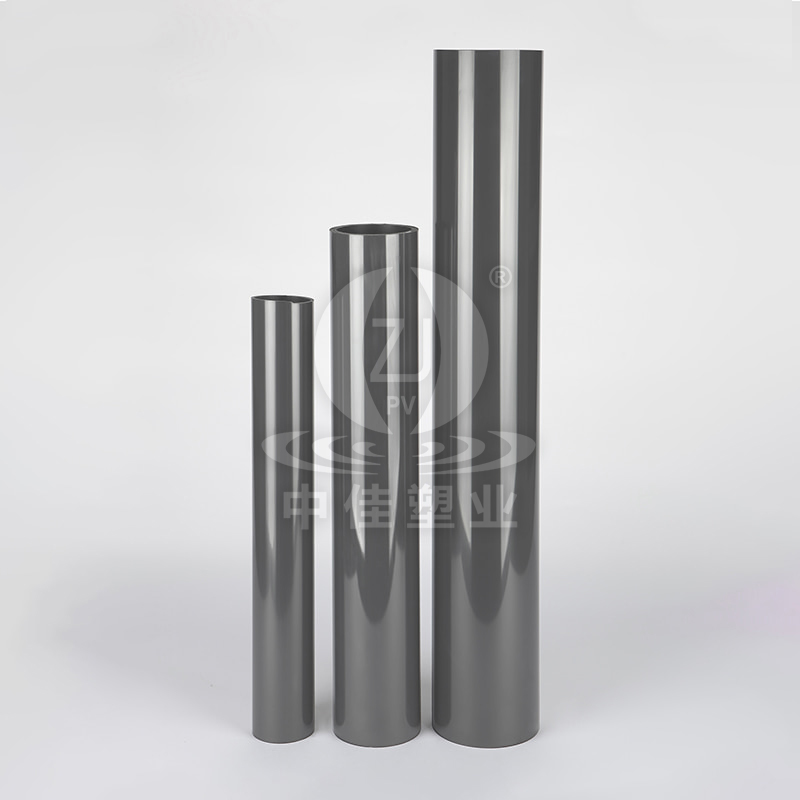
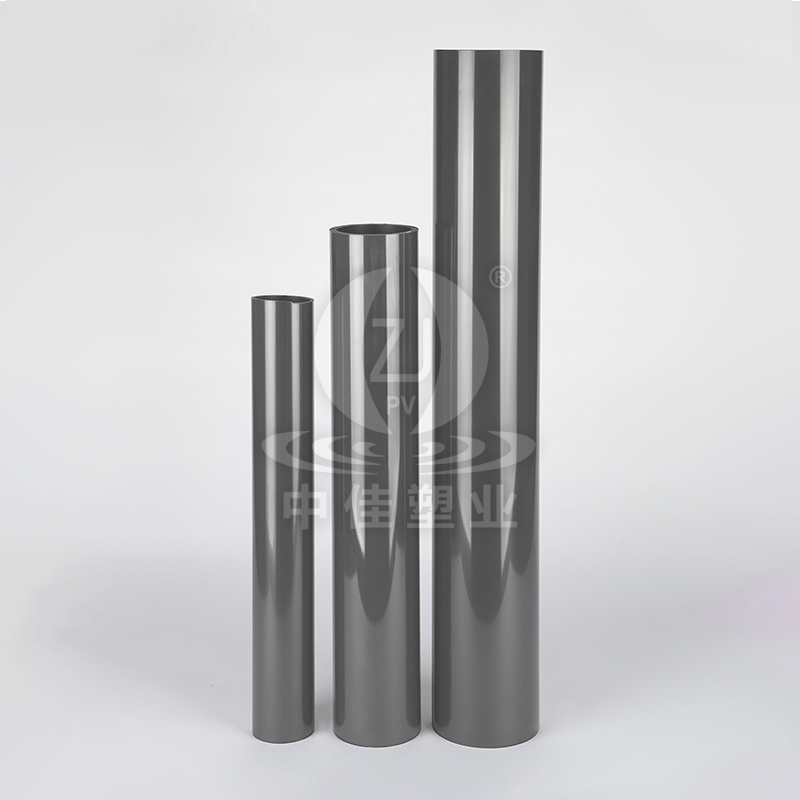
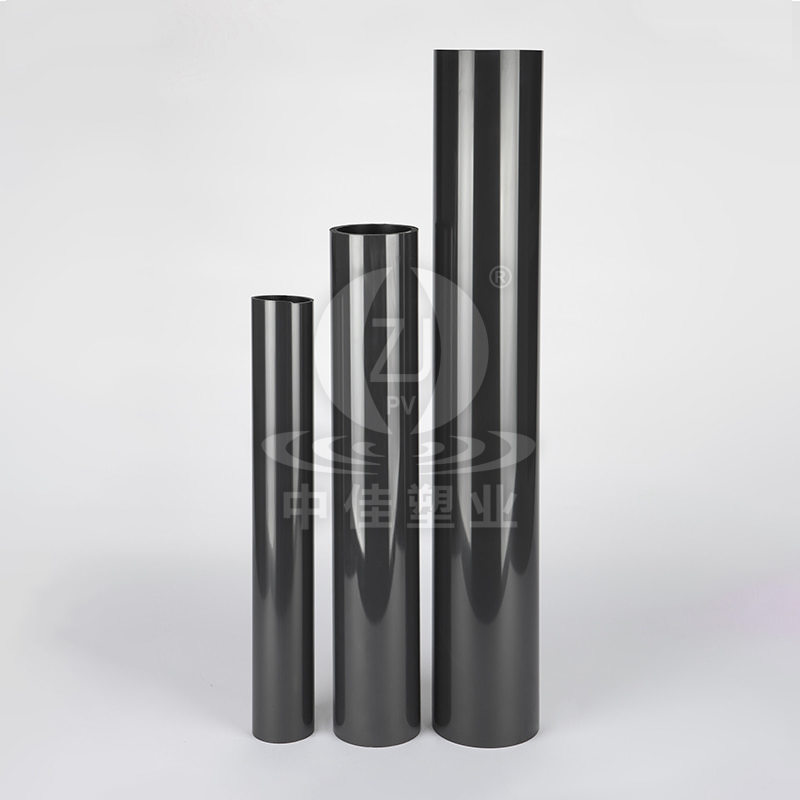
PVC-U S5 pipes are unplasticized polyvinyl chloride pressure pipes classified under the SDR (Standard Dimension Ratio) and Series (S) designation system defined by ISO 4422 and its regional equivalents, including EN 1452 in Europe. The "S" number in the classification is a dimensionless parameter that defines the relationship between the pipe's outside diameter and its wall thickness. Specifically, the Series number S is calculated as S = (OD − e) / (2e), where OD is the nominal outside diameter and e is the wall thickness. For S5 pipes, this ratio equals 5, meaning the wall thickness is proportionally thicker — and therefore the pipe has a higher pressure rating — than pipes of higher Series numbers such as S8 or S10, which have thinner walls relative to their diameter.
The Series classification system is directly linked to the pipe's pressure rating at a reference temperature of 20°C. PVC-U S5 pipes are rated for a working pressure of 10 bar (1.0 MPa) at 20°C when used with an overall service coefficient C of 2.0 as specified in ISO 4422. This 10 bar rating makes S5 the commonly specified PVC-U pipe series for potable water distribution, irrigation mains, and industrial process pipework where moderate to high working pressures are required. Understanding the S number is therefore essential for engineers and procurement specialists who need to match pipe specifications to system pressure requirements without over-specifying wall thickness — which increases material cost — or under-specifying — which risks pipe failure in service.
The defining technical characteristic of PVC-U S5 pipes is that their wall thickness at any given nominal diameter is determined by the S5 formula, resulting in a specific SDR value of SDR 11 (since SDR = 2S + 1 = 11 for S5). This means the outside diameter divided by the wall thickness always equals 11, ensuring consistent pressure capacity across all diameter sizes within the S5 series. The following table shows the nominal outside diameters, wall thicknesses, and nominal working pressures for the commonly specified sizes of PVC-U S5 pipes according to ISO 4422 / EN 1452.
| Nominal OD (mm) | Min. Wall Thickness (mm) | SDR | Max. Working Pressure (bar @ 20℃) |
| 20 | 1.9 | 11 | 10 |
| 25 | 2.3 | 11 | 10 |
| 32 | 3 | 11 | 10 |
| 40 | 3.7 | 11 | 10 |
| 50 | 4.6 | 11 | 10 |
| 63 | 5.8 | 11 | 10 |
| 75 | 6.8 | 11 | 10 |
| 90 | 8.2 | 11 | 10 |
| 110 | 10 | 11 | 10 |
| 160 | 14.6 | 11 | 10 |
| 200 | 18.2 | 11 | 10 |
| 250 | 22.7 | 11 | 10 |
It is important to note that the 10 bar working pressure rating applies at 20°C. PVC-U's pressure capacity decreases with rising temperature — at 30°C the de-rating factor reduces allowable pressure by approximately 20%, and at 40°C by approximately 40%. Engineers designing systems that may see elevated operating temperatures must apply the appropriate de-rating factors from the relevant standard to ensure the selected S5 pipe remains within its safe operating envelope throughout the system's service life.
PVC-U — unplasticized polyvinyl chloride — is the base material from which S5 pipes are manufactured, and its inherent physical and chemical properties determine the practical performance envelope of the pipe in service. PVC-U contains no plasticizer additives, which distinguishes it from flexible PVC and gives it the rigidity, chemical resistance, and long-term dimensional stability required for pressurized piping applications. The material's required strength for pipe manufacture — its required strength (MRS) — is 25 MPa as classified in ISO 4422, and this value is the basis for the pressure rating calculations that produce the 10 bar working pressure for S5 pipes under the standard service coefficient.

In addition to its pressure-bearing capability, PVC-U offers several material properties that make it particularly attractive for water distribution and process piping applications. Its smooth internal bore — with a Hazen-Williams flow coefficient C of approximately 150, compared to 100 to 120 for aged ductile iron or steel pipe — results in significantly lower head loss per unit length and better maintained flow capacity over the pipe's service life. The material is inherently resistant to internal corrosion and biological fouling buildup because its smooth, non-metallic surface does not support the electrochemical reactions and mineral deposition mechanisms that progressively reduce the flow capacity of metal pipes. Its electrical non-conductivity eliminates the risk of galvanic corrosion at connections to fittings and appurtenances made from different materials.
Selecting the correct Series number for a PVC-U piping application requires understanding how S5 relates to the other Series designations in terms of wall thickness, pressure rating, and cost. The three commonly specified PVC-U pipe series in water and industrial applications are S5, S8, and S10, each representing a different balance between pressure capacity and material usage.
PVC-U S8 pipes (SDR 17) have thinner walls than S5 for the same outside diameter, resulting in a lower pressure rating of 6 bar at 20°C compared to S5's 10 bar. S8 pipes use approximately 35% less PVC-U material per unit length than equivalent S5 pipes, making them significantly less expensive per meter. For low-pressure applications such as gravity-fed irrigation distribution laterals, low-head water supply in flat terrain, and gravity drainage systems that are occasionally pressurized, S8 provides adequate pressure capacity at reduced cost. When system pressures consistently exceed 6 bar or when pressure surge (water hammer) analysis indicates peak transient pressures above the S8 pipe's rated capacity, S5 must be specified instead.
PVC-U S10 pipes (SDR 21) represent the thinnest-walled series in common use, rated for 5 bar working pressure at 20°C. They are the lowest-cost option per meter but are limited to very low-pressure applications where surge pressures are controlled and external soil loads on buried pipes do not require additional wall stiffness. In pressurized water distribution systems, S10 pipes are considered marginal for direct use in mains and are more commonly used for service connections in flat terrain with pumped systems where pressure is carefully managed. S5 pipes, by contrast, provide a comfortable safety margin against both normal operating pressures and the pressure surges generated by pump starts and stops or valve closure events in live distribution systems.
The combination of 10 bar pressure rating, corrosion resistance, smooth bore, long service life, and competitive cost makes PVC-U S5 the default pipe specification across a wide range of water infrastructure and industrial piping applications. The following areas represent the significant and established uses globally.
PVC-U S5 pipes are the widely used pipe material for potable water distribution mains in diameter ranges from 63 mm to 315 mm worldwide. Their compliance with drinking water contact standards — including EN 1452 for Europe, NSF/ANSI 61 in North America, and equivalent national standards in Asia and Australasia — confirms that they do not leach harmful substances into the conveyed water at the concentrations and contact times encountered in distribution systems. The material's long-term hydrostatic strength ensures service lives exceeding 50 years when installed correctly, and its light weight compared to ductile iron or concrete pipes of equivalent pressure rating reduces installation labor costs significantly.
Agricultural irrigation schemes — including drip, sprinkler, and micro-irrigation systems — depend heavily on PVC-U S5 pipes for main supply lines and sub-main distribution networks operating at pump delivery pressures of 4 to 8 bar. The combination of smooth bore for efficient flow, UV-stabilized formulations for above-ground installations, and solvent cement or rubber ring jointing systems that can be assembled by agricultural workers without specialist tools makes PVC-U S5 the dominant pipe material in large-scale irrigation infrastructure across the Middle East, Southern Europe, India, and Sub-Saharan Africa.
In chemical processing, water treatment, aquaculture, and swimming pool installations, PVC-U S5 pipes are specified for conveying water, dilute acids, alkalis, saline solutions, and other fluids that would rapidly corrode metal piping. PVC-U's chemical resistance extends to inorganic acids at ambient temperature, dilute caustic solutions, chlorinated water at standard treatment concentrations, and many organic solutions that do not contain strong solvents. The 10 bar pressure rating of S5 provides adequate working margin for the moderate pressures encountered in industrial water treatment and recirculation systems.
Where local fire safety codes and insurance requirements permit plastic piping for fire protection systems — which is increasingly the case for residential and light commercial occupancies in many jurisdictions — PVC-U S5 pipes are used for below-ground fire main supply lines and sprinkler branch pipework operating at static pressures up to 10 bar. Their compliance with fire classification standards in applicable codes and their resistance to the chlorinated water typically maintained in fire sprinkler systems make them a viable and cost-effective alternative to galvanized steel in approved applications.
The jointing system used with PVC-U S5 pipes must be compatible with the pipe's pressure rating and the application's mechanical and chemical requirements. Two principal jointing methods are in widespread use, each suited to different installation conditions and pipe sizes.
Correct installation is as important as correct pipe specification in ensuring that PVC-U S5 pipes deliver their design service life and pressure performance. Several installation factors have a disproportionate influence on long-term pipe integrity and must be carefully controlled on site.

Follow us
PVC-U
PVC-U Pipes PVC-U Fittings for Industry PVC-U Fittings for Water Supply PVC-U Pipes ASTM D1785 PVC-U Fittings ASTM SCH80
Copyright © Changzhou Zhongjia Plastic Industry Co., Ltd.All rights reserved.
 UPVC/CPVC Pipes Manufacturers


Copyright @ Changzhou Zhongjia Plastic Industry Co., Ltd.All Rights Reserved.



 عربى
عربى  中文简体
中文简体  Español