Content
An operator shuts down a dosing pump for the night, and by morning the discharge line has drained back into the storage tank. Air has entered the pump head, the batch concentration is off-specification, and process fluid has migrated where it should not. A single component would have prevented all of that: a flap check valve.
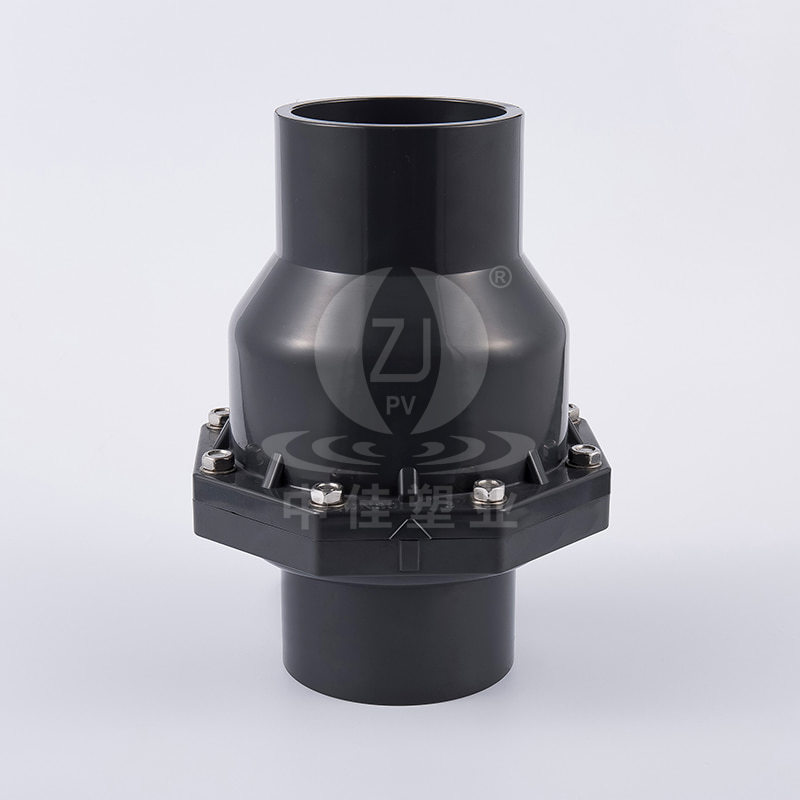
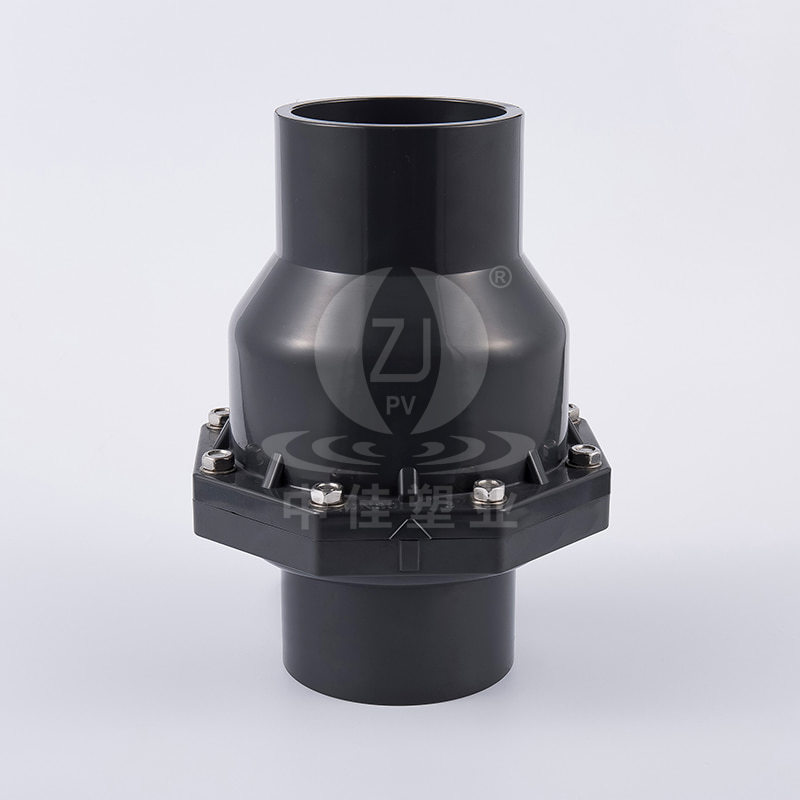
Flap check valves — also called swing check valves — are the most straightforward non-return mechanism used in plastic piping systems. In their UPVC form, they give industrial and water-supply lines a corrosion-resistant, low-maintenance barrier against reverse flow. This guide explains how they work, where they perform best, and what to verify before you install one.
In short: for most clean-fluid UPVC systems within standard pressure and temperature limits, a flap check valve offers the lowest total cost of ownership among non-return options.
The core is a disc, or flap, attached to a hinge pin inside the valve body. When fluid flows in the intended direction, it swings the flap open. When flow stops or reverses, the flap falls back against a seat and blocks the passage. There are no springs, diaphragms, or external actuators.
This simple geometry produces several practical characteristics:
For most UPVC piping applications, the flap check valve is chosen where simplicity and low head loss matter more than instant shutoff.
The material is the main reason these valves appear in chemical dosing lines, water-treatment skids, irrigation pump sets, and industrial cooling circuits. PVC-U is inherently resistant to a wide range of acids, alkalis, saline water, and many process chemicals. It does not rust, and it weighs roughly one-third of an equivalent metal valve.
Pressure and temperature ratings follow the same standards used for UPVC pipe and fittings: national standards such as GB/T 10002.1, ISO 1452 for industrial series, and American standards such as ASTM D1785 for SCH40 and SCH80. Continuous service temperature is normally limited to about 60°C (140°F), and the pressure rating should be derated as the service temperature rises above ambient. The sealing face is typically EPDM, which suits water and most diluted chemical media.
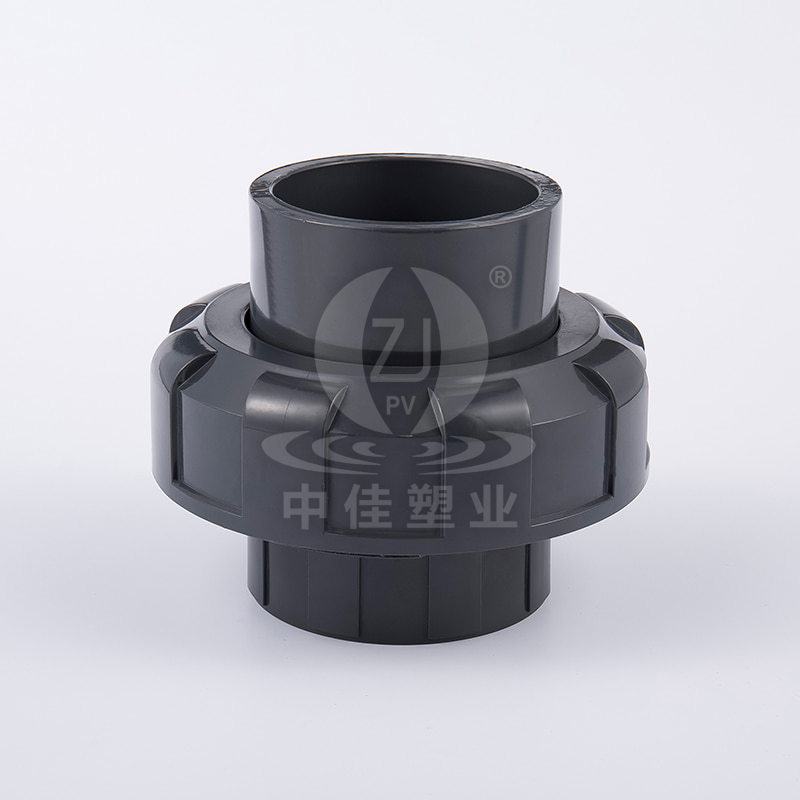
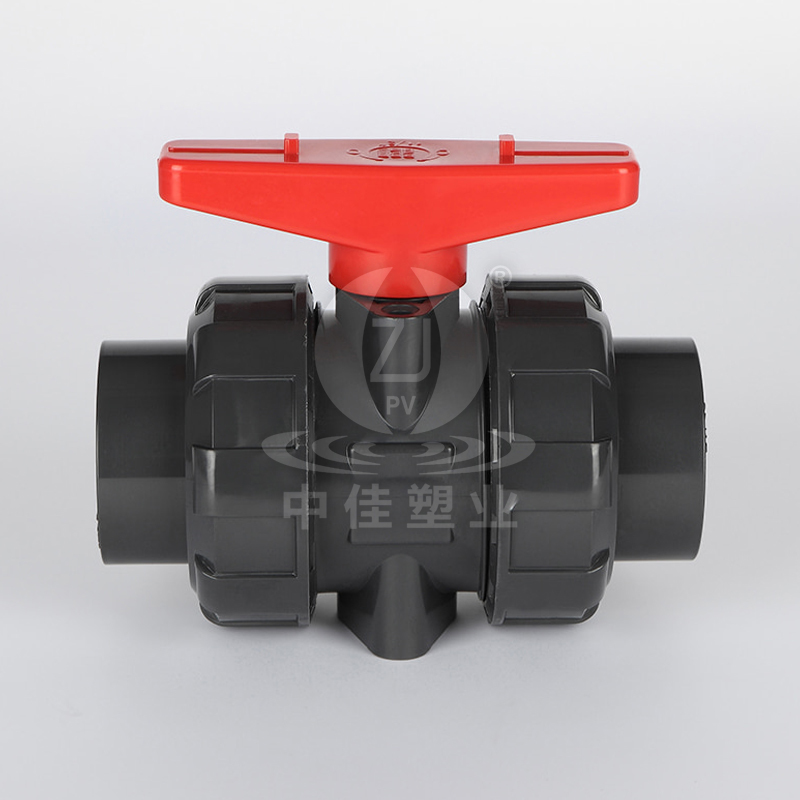
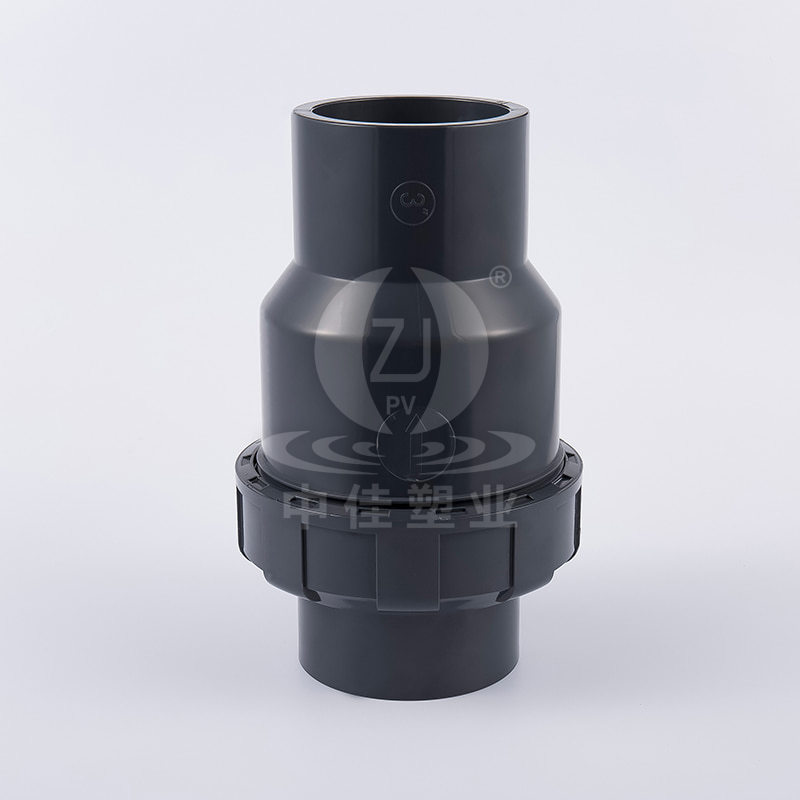
A useful feature of modern UPVC flap check valves is the true-union body. The valve can be removed from the line without cutting pipe or disturbing adjacent fittings, which turns inspection and seal replacement into routine work. Our UPVC valve range includes true-union flap check valves in the sizes and pressure series most commonly specified for industrial and supply lines.
 True-Union PVC-U Flap Check Valve for Backflow PreventionThis DIN-standard, injection-moulded PN10 flap check valve features a true-union body, allowing removal without cutting pipe. It suits industrial supply lines and offers minimal maintenance, reliable sealing, and easy installation in horizontal or vertical layouts.View Product →
Three non-return designs dominate the UPVC valve market: flap (swing) check valves, ball check valves, and spring-loaded check valves. The operating behaviour differs in ways that affect pipe layout, flow stability, and maintenance frequency.
| Characteristic | Flap check | Ball check | Spring-loaded check |
|---|---|---|---|
| Closing mechanism | Gravity and reverse flow | Ball settles onto seat | Spring pushes disc closed |
| Flow resistance | Low | Medium | Medium to high |
| Body length | Longest | Compact | Compact |
| Best mounting | Horizontal, or vertical with upward flow | Any orientation | Any orientation |
| Chatter risk | At low velocity | At low velocity | Low |
| Debris tolerance | Moderate | Lower; debris can hold ball off seat | Moderate |
| Typical maintenance | Inspect flap and seat | Inspect ball and seat | Check spring tension |
When a pipe runs long and straight with a stable pump discharge, the flap check valve usually gives the best balance of low energy loss and reliable sealing. When space is tight and the line is frequently drained and refilled, a ball check valve behaves predictably in any orientation. If pump start-stop cycles are frequent and water hammer is a real concern, a spring-loaded design closes before reverse flow accelerates.
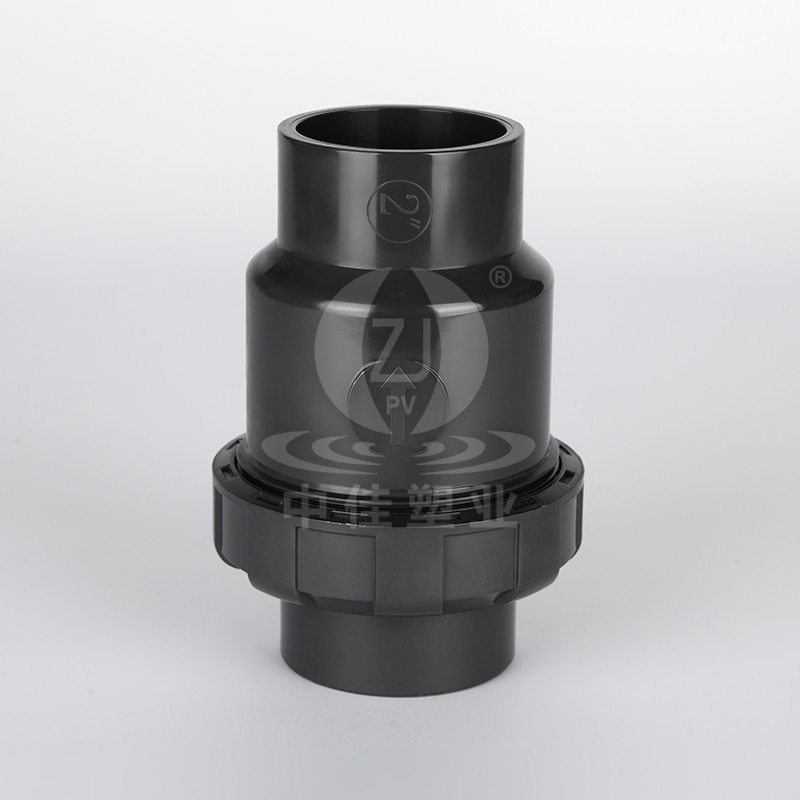 PVC-U Ball Check Valve for Versatile OrientationDesigned for predictable performance in any orientation, this DIN-standard PN10 ball check valve fits tight spaces and lines that are frequently drained and refilled. Its robust plastic construction allows quick tool-free installation and minimal maintenance, making it a dependable backflow-prevention choice.View Product →
A well-made flap check valve will still underperform if the pipe layout forces it outside its working envelope. The first rule is direction: the flow arrow on the body must point downstream. The second rule is orientation.
Because the flap depends on gravity to return to its seat, install the valve in a horizontal line with the hinge pin on the top side, or in a vertical line with flow directed upward. Mounting with downward flow is possible only with spring-assisted designs, which trade away the low pressure drop that makes flap valves attractive.
Pumps create turbulent discharge that can make the flap flutter. Placing the valve at least five to ten pipe diameters downstream of the pump discharge, and away from elbows and reducers, reduces chattering. Chattering shortens the life of the hinge pin and seating surface and adds noise. For a summary of field-proven practices, see these installation and maintenance tips for UPVC valves.
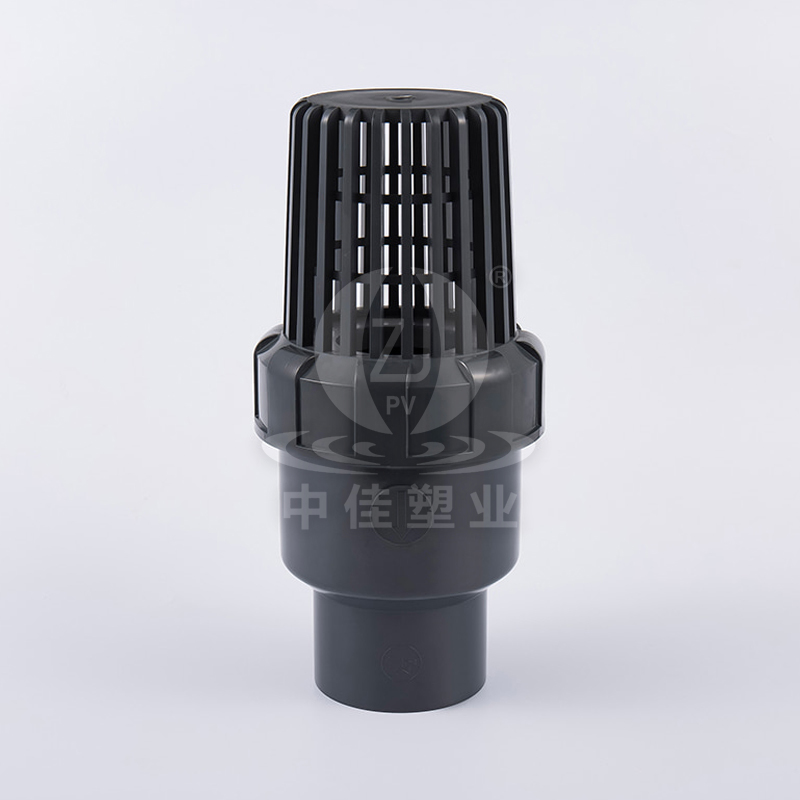
Where a pump suction line draws from a tank or well, a flap bottom valve performs the same non-return duty while keeping the line primed. The flap mechanism is common here because the valve can be fitted with a strainer screen to stop debris from entering the pump.
Finally, leave enough clearance around the valve for removal. A true-union flap check valve can be swapped out in minutes, but only if the adjacent pipe has not been glued hard against the valve ends.
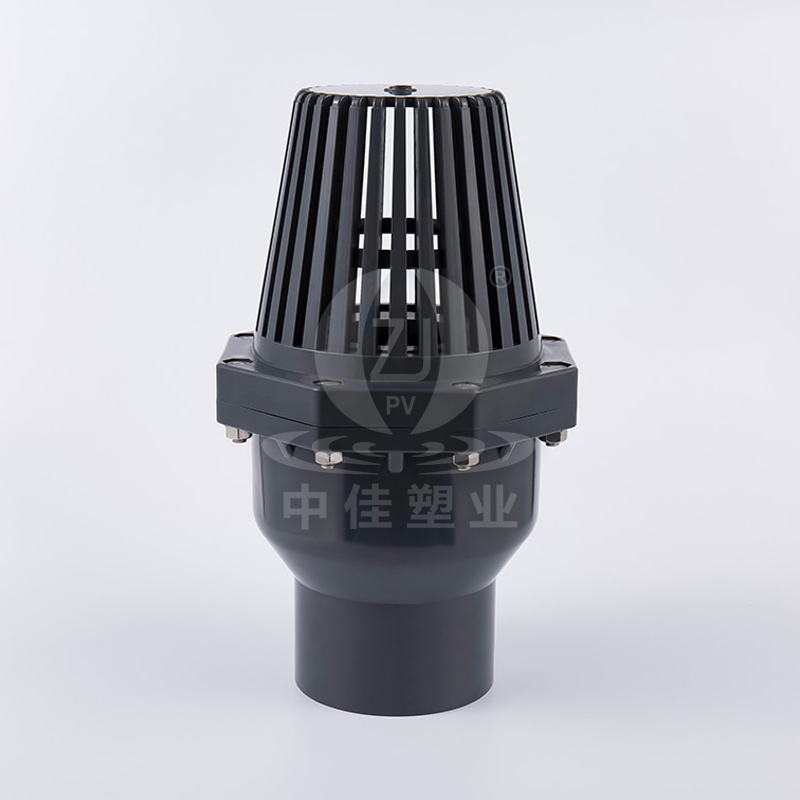 PVC-U Flap Bottom Valve with Strainer for Line EndsThis vertical-installation foot valve includes a netting cap to sieve out unwanted materials, preventing backflow at line ends. With strong corrosion resistance, simple structure, and good sealing, it serves industrial pipelines, water treatment, and agricultural irrigation economically.View Product →
Procurement mistakes with plastic valves usually come from overlooking one of four details.
It is also worth confirming that the manufacturer moulds its own body, flap, and seal rather than reselling mixed components. Consistent moulding quality and traceable material properties affect how well the flap seats after years of service.
Flap check valves are not the most complex component in a piping system, but they are the one that quietly protects pumps, batch quality, and system integrity. For UPVC lines in industrial, water-supply, agricultural, and building services, a correctly sized and properly installed flap check valve usually delivers the lowest long-term cost.
Compare the flap design against your flow conditions, confirm the pressure rating and connection style, and choose a supplier that can document production quality and material traceability. These few minutes of selection diligence prevent a very inconvenient backflow event later.

Follow us
PVC-U
PVC-U Pipes PVC-U Fittings for Industry PVC-U Fittings for Water Supply PVC-U Pipes ASTM D1785 PVC-U Fittings ASTM SCH80
Copyright © Changzhou Zhongjia Plastic Industry Co., Ltd.All rights reserved.
 UPVC/CPVC Pipes Manufacturers


Copyright @ Changzhou Zhongjia Plastic Industry Co., Ltd.All Rights Reserved.



 عربى
عربى  中文简体
中文简体  Español